 897 Lexington Ave. New York, NY 10065
 212-517-7900
 Significant weight loss — whether from diet, exercise, bariatric surgery, or GLP-1 medications like Ozempic and Wegovy — often reveals a side effect few people expect: facial changes after weight loss that can add years to your appearance. Sunken cheeks, hollow temples, a less defined jawline, and loose skin are common, even in patients who feel healthier and more confident in their bodies than ever.
The good news is that a weight loss face doesn’t have to be permanent. Depending on whether your main concern is lost volume, excess skin, or both, treatments ranging from dermal fillers to skin-tightening devices can restore a more rested, youthful look. This guide breaks down why these changes happen, how to tell volume loss from skin laxity, and which treatments Dr. Ariel Ostad recommends for each.
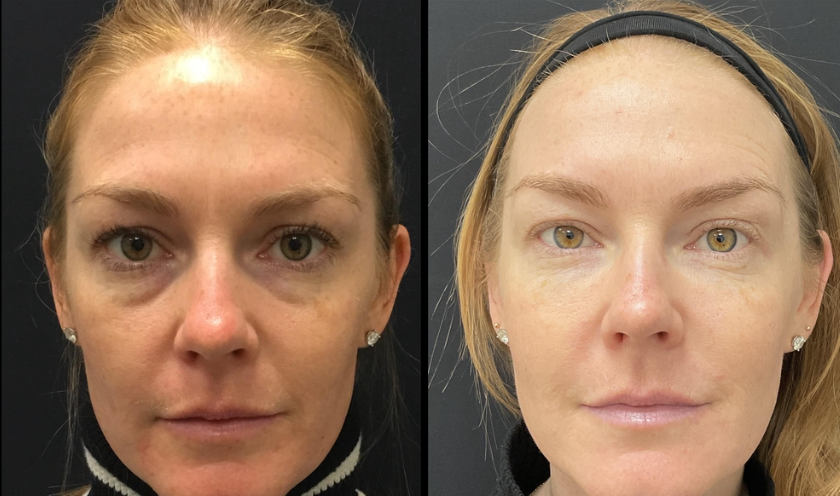
Why the Face Changes After Weight Loss
The face relies on a stable layer of fat, collagen, and elastin to keep skin smooth and contoured. When you lose weight quickly, you lose fat from your face just as you do from the rest of your body — but facial skin doesn’t always have time to shrink back down to match the new, smaller structure underneath it.
This is compounded by natural aging: collagen production declines by roughly one percent per year as we get older, which is why rapid weight loss can lead to sunken facial features that look more pronounced than the weight loss alone would suggest. In our practice, we’ve seen a sharp increase in patients presenting with this concern as GLP-1 medications have made rapid, significant weight loss far more common.
The result is a face that can look gaunt, tired, or older than your actual age — a pattern patients often describe simply as facial volume loss after weight loss.
Volume Loss vs. Skin Laxity
Not all post-weight-loss facial changes are the same, and the right treatment depends on which one (or both) you’re dealing with.
Cheek and Temple Volume Loss
Fat loss in the cheeks and temples is often the first sign of a changing face. Hollow temples and flattened cheekbones remove the natural “scaffolding” that keeps the mid-face looking full and youthful, which can make the whole face appear more angular and aged than intended.
Jawline Changes
Weight loss frequently softens or blurs the jawline — either because of skin laxity along the lower face and neck, or because volume shifts downward once cheek support is lost. Patients often notice this as jowling or a less crisp jawline, even at a lower body weight than before.
Skin Laxity
Unlike volume loss, skin laxity is about the skin itself losing elasticity and failing to “shrink-wrap” back to the smaller facial structure. This shows up as loose or crepey skin, fine lines, and sagging along the cheeks, jawline, and neck — and it’s a concern that fillers alone cannot fully resolve.
When Fillers Help
If your primary concern is lost fullness rather than loose skin, dermal fillers are typically the most effective, least invasive option. Hyaluronic acid fillers from the JUVÉDERM® Collection restore volume immediately in the cheeks, temples, and jawline, while also drawing in moisture to improve skin hydration and texture. For patients looking for more gradual, longer-lasting volume, Sculptra® Aesthetic stimulates your own collagen production over several months.
Fillers work best when:
- The face looks hollow or deflated rather than loose or sagging
- Skin elasticity is still relatively good
- You want a post-weight-loss facial rejuvenation option with no downtime
Dr. Ostad generally recommends waiting until you’re close to your target weight before treating with cheek or jawline fillers, since continued fat loss afterward can shift results and require touch-ups.
When Skin Tightening Helps
If loose, crepey, or sagging skin is the bigger issue — rather than lost volume — skin-tightening treatments address the problem at its source instead of masking it with added fullness. Depending on the severity of laxity, options include:
- Ellacor 2.0 — a micro-coring technology that removes small amounts of excess skin to visibly tighten and firm the face
- Morpheus8 — radiofrequency microneedling that remodels collagen beneath the skin’s surface
- EMFACE® — a non-invasive treatment combining radiofrequency and muscle stimulation to lift and firm
- AccuTite/BodyTite/FaceTite — minimally invasive radiofrequency-assisted skin tightening for more noticeable laxity
- Thread Lift or MyEllevate® — for patients with moderate jawline and neck sagging who want a lift without surgery
Fillers vs. Ellacor vs. Other Options
Fillers add volume; they don’t remove or tighten excess skin. Ellacor and similar energy-based devices do the opposite — they tighten and reduce loose skin but won’t restore volume that’s already been lost. For many post-weight-loss patients, the honest answer is that neither treatment alone solves the full picture, which is why an accurate diagnosis of volume loss vs. skin laxity matters more than picking a treatment by name recognition.
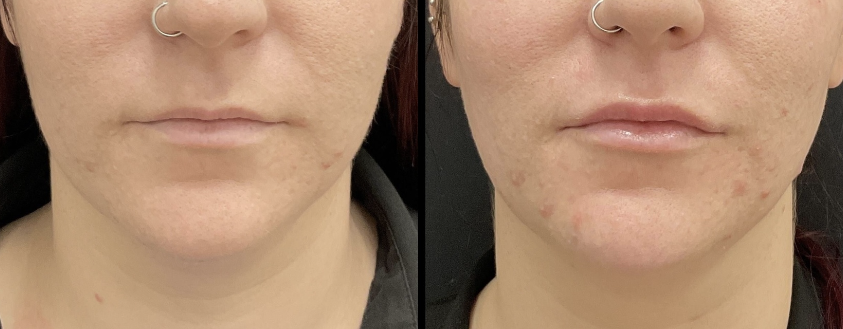
Combining Treatments
Because most patients with significant weight loss experience some combination of volume loss and skin laxity, Dr. Ostad often recommends a layered approach: fillers or Sculptra to rebuild lost structure, paired with a skin-tightening treatment like Morpheus8, Ellacor, or EMFACE to address looseness and improve overall skin quality. Combining treatments this way tends to produce a more natural, balanced result than relying on volume or tightening alone — and treatment plans can be adjusted over time as your weight stabilizes.
Who Is a Good Candidate?
You may be a good candidate for facial rejuvenation after weight loss if you:
- Have lost a significant amount of weight through diet, exercise, surgery, or medication
- Have reached, or are close to, your target weight
- Notice hollowing in the cheeks or temples, a softened jawline, or loose/sagging skin
- Are in good general health with no active skin infections or untreated medical conditions
- Want a non-surgical or minimally invasive way to look as good as you feel
A consultation with Dr. Ostad is the best way to determine whether fillers, skin tightening, or a combination approach fits your specific facial changes.
Restore Your Features After Weight Loss
Whether your facial changes after weight loss are due to volume loss, skin laxity, or both, Dr. Ariel Ostad can help you find the right combination of treatments to look as good as you feel. Call 212-517-7900 to schedule a consultation, or fill out our online contact form and our team will be in touch.
FAQs
Why does my face look older after weight loss?
Losing weight quickly removes fat from the face just as it does elsewhere in the body, but the skin doesn’t always retract to match the smaller underlying structure. Combined with the natural, ongoing decline in collagen production as we age, this can leave the cheeks looking hollow, the jawline less defined, and the skin looser — all of which can make the face look older even though the rest of the body looks leaner and healthier.
Do fillers help weight-loss face?
Yes, in the right circumstances. Fillers are highly effective when the main issue is lost volume in the cheeks, temples, or jawline, since they restore fullness immediately and can also improve skin hydration over time. However, fillers don’t correct significant skin laxity — if loose or sagging skin is the primary concern, a skin-tightening treatment (alone or combined with fillers) will generally give a better result.
What if the problem is loose skin instead of volume loss?
If loose, crepey, or sagging skin is your main concern rather than hollowness, fillers alone won’t resolve it, since they add volume rather than remove or tighten excess skin. Treatments like Ellacor, Morpheus8, EMFACE, or AccuTite/BodyTite/FaceTite are designed specifically to tighten skin and improve elasticity, and are typically the better starting point for this type of concern.
Schedule a
Consultation
Consultation
By submitting this form you agree to be contacted via phone/text/email.