Loose Skin After Weight Loss: Face and Body Treatment Options

Losing a significant amount of weight is a major achievement, but it often comes with an unwelcome side effect: loose or sagging skin. Whether it shows up as excess skin after weight loss around the abdomen, a looser face after weight loss, or general skin laxity from head to toe, this is one of the most common concerns patients bring to Dr. Ariel Ostad’s Manhattan practice. The good news is that there are several ways to address it, ranging from nonsurgical skin-tightening technology to surgical procedures, depending on how much skin laxity is present and where it’s located.

Ellacor loose skin weight loss

Why Loose Skin Happens After Weight Loss

Skin is elastic, but that elasticity has limits. When the body carries excess fat for a long time, the skin stretches to accommodate it. Once that fat is lost, quickly through bariatric surgery or gradually through diet, exercise, or medication, the skin doesn’t always spring back to its original shape. Instead of “shrinking” along with the body, stretched skin can remain loose, leaving folds or hanging tissue on the face and body.
Several factors influence how much skin laxity a person experiences after weight loss.

Age and Skin Elasticity

Younger skin contains more collagen and elastin, the proteins responsible for skin’s firmness and ability to bounce back. As we age, collagen production naturally slows down, which means skin has less capacity to retract after it’s been stretched. A 25-year-old and a 55-year-old who lose the same amount of weight often end up with very different amounts of loose skin.

Amount and Speed of Weight Loss

The more weight that’s lost, and the faster it comes off, the more likely it is that skin will be left behind. Rapid weight loss, such as after bariatric surgery or on newer weight-loss medications, doesn’t give the skin time to gradually adjust, which is why post-weight-loss skin laxity is especially common in these patients.

Genetics

Some people are simply predisposed to more resilient skin than others. Genetics influence collagen quality, elastin levels, and how skin responds to stretching, which is why two people who lose similar amounts of weight can have very different results.

Facial Changes After Weight Loss

Facial changes after weight loss are often one of the first things patients notice, sometimes before changes are as visible elsewhere on the body. Facial fat helps support the skin and gives the face a smooth, youthful contour. When that fat is lost, the skin can appear looser, and features that were once firm and full can start to look deflated or sagging.

Common signs of a loose face after weight loss include:

  • Hollowing in the cheeks and temples
  • Deepening nasolabial folds (smile lines)
  • Sagging along the jawline and jowls
  • Loose, crepey skin under the chin and neck
  • A generally “older” or gaunt appearance, even at a lower body weight

Because facial aging after weight loss involves both lost volume and loose skin, treatment often needs to address both issues rather than skin laxity alone.

Loose Skin on the Abdomen and Body

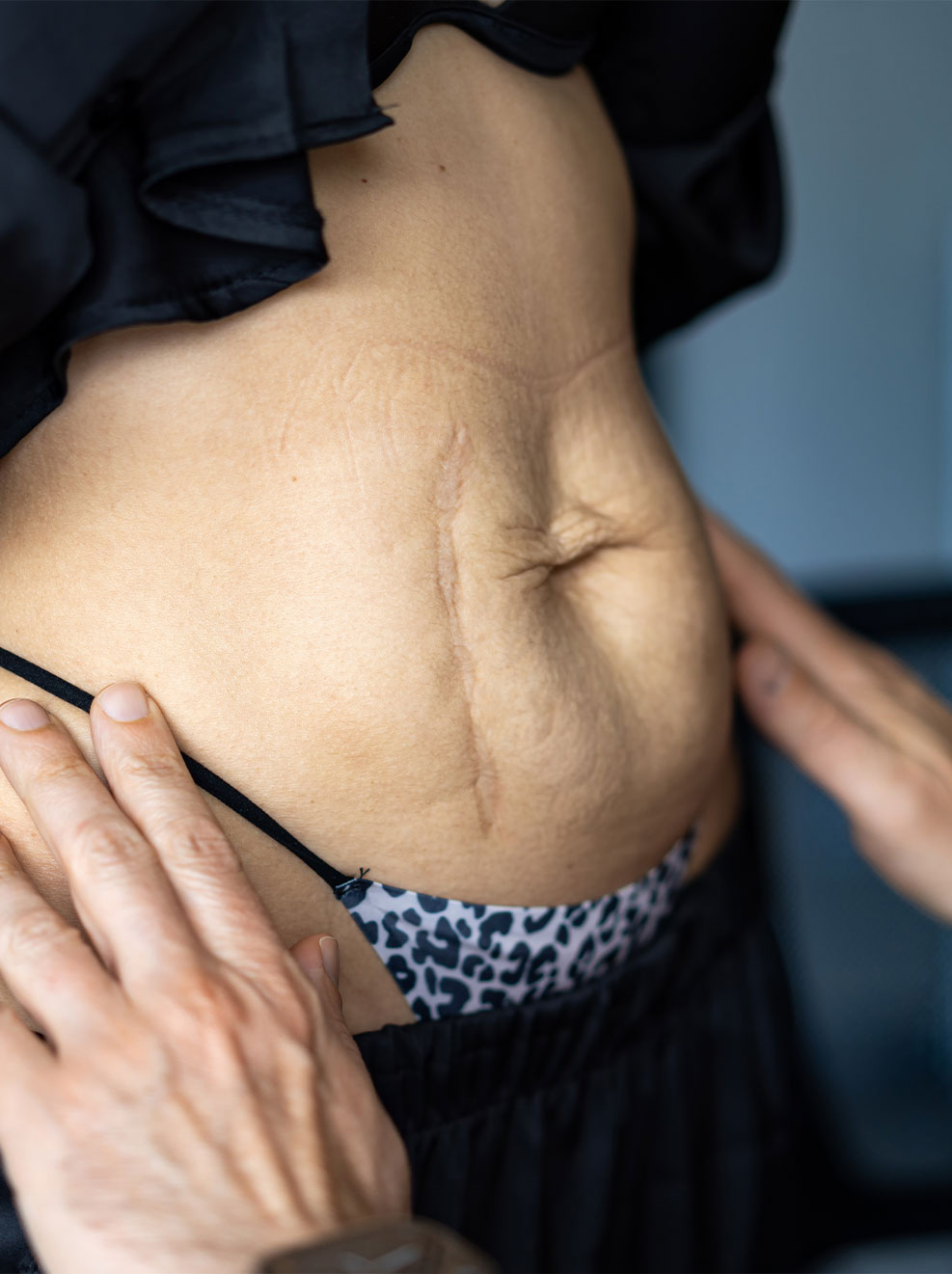
Away from the face, loose stomach skin after weight loss is one of the most frequent complaints, along with laxity in the upper arms, thighs, and under the breasts. Unlike the face, these areas tend to involve larger folds of excess skin rather than fine lines, which can affect clothing fit, exercise, hygiene, and self-confidence.

Face vs. Neck vs. Abdomen

The right treatment approach depends heavily on where skin laxity is occurring:

Face: Involves thinner skin and more delicate structures, making it well suited to targeted, precise treatments that improve tone without disrupting facial expression.

Neck: A common trouble spot because neck skin is thin and often shows laxity earlier than other areas; even patients who look youthful in the face may have significant neck skin laxity.

Abdomen: Involves thicker skin and often larger volumes of excess tissue, which may require more significant intervention if skin has been stretched extensively, as is common after major weight loss.

Will Loose Skin Improve on Its Own?

Mild skin laxity, especially in younger patients with a smaller amount of weight lost, may improve somewhat over several months as the body adjusts. Maintaining a stable weight, staying hydrated, and supporting collagen health can help at the margins. However, once skin has been significantly overstretched, it generally does not fully retract on its own. For moderate to severe laxity, especially after substantial or rapid weight loss, some form of treatment is typically needed to meaningfully tighten the skin.

Nonsurgical Treatment Options

For patients with mild to moderate skin laxity who want to avoid surgery, several nonsurgical treatments can help firm and tighten the skin:

  • Radiofrequency and energy-based skin tightening stimulates collagen production using controlled heat, gradually firming skin over a series of treatments.
  • Microneedling with radiofrequency combines mechanical stimulation with heat energy to improve both skin texture and tightness.
  • Micro-coring technology, such as Ellacor, physically removes tiny columns of excess skin to create a tightening effect without incisions.
These options work best for patients with mild to moderate laxity and realistic expectations about the degree of improvement possible without surgery.

Ellacor Non-surgical option

When Ellacor May Be Appropriate

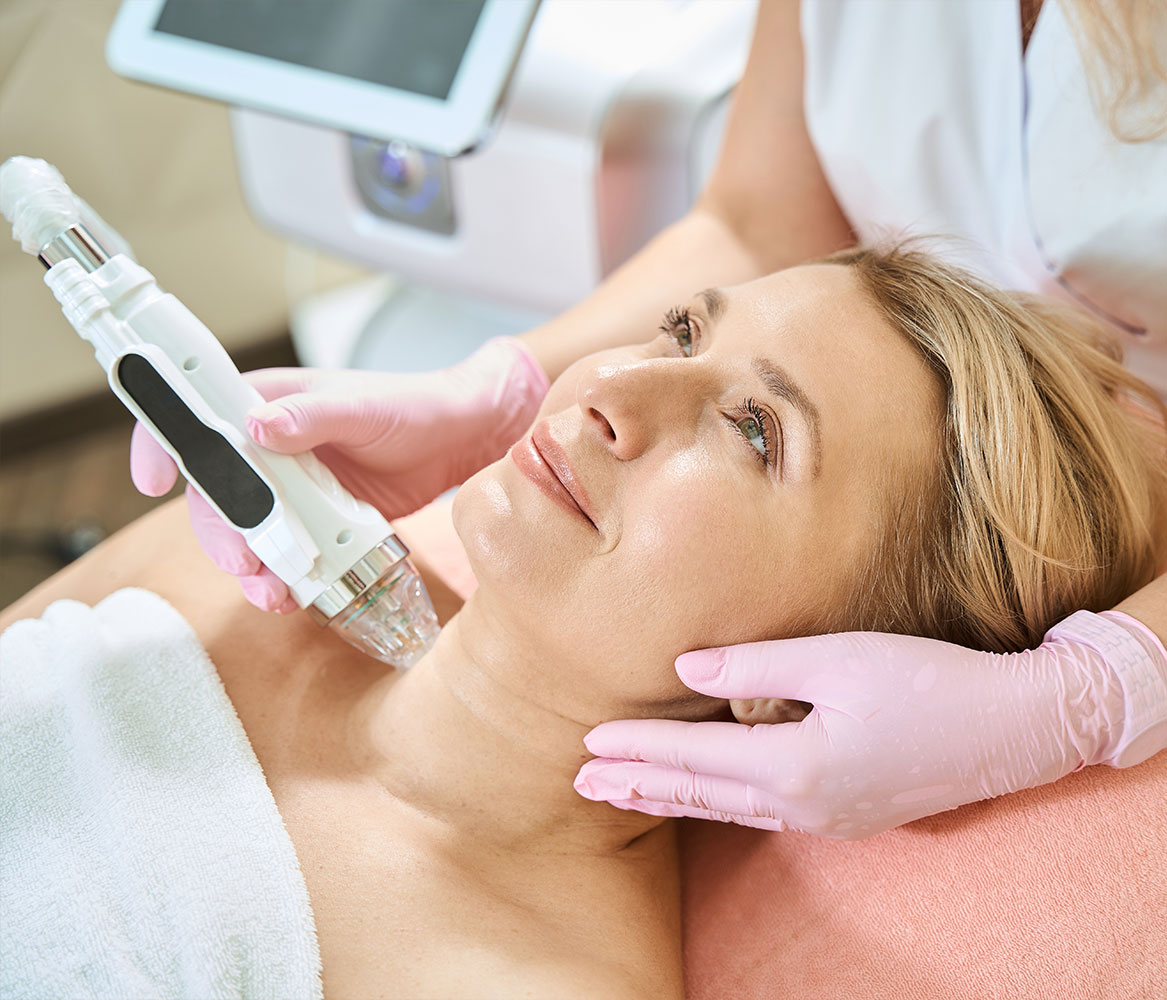
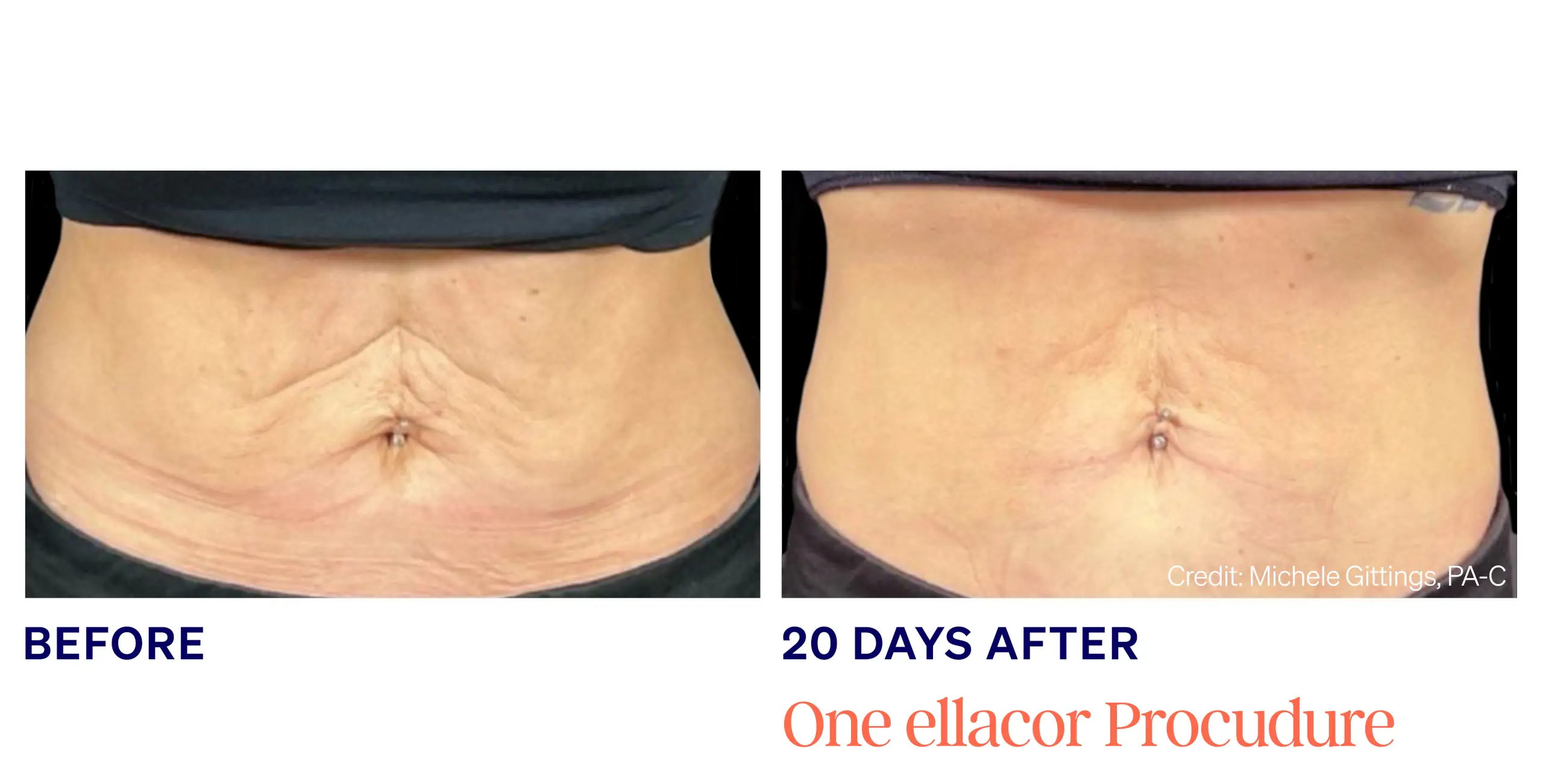
Ellacor uses micro-coring technology to remove microscopic columns of skin, allowing the surrounding tissue to draw together and tighten as it heals. It was originally cleared to treat moderate to severe wrinkles and laxity in the mid and lower face, and its use has since been expanded to include body areas such as the abdomen, upper arms, and knees, making it particularly relevant for patients experiencing skin laxity after weight loss.

Ellacor tends to be a good option for patients who:

  • Have mild to moderate skin laxity rather than large amounts of excess, hanging skin
  • Are looking for a nonsurgical alternative to a facelift, neck lift, or body contouring surgery
  • Want to avoid the incisions, anesthesia, and downtime associated with surgery
  • Understand that results develop gradually as the skin heals, and that more than one session is often needed

Ellacor is not designed to replace surgery for patients with large amounts of excess skin; in those cases, it may be considered as a complementary or maintenance treatment rather than the primary solution.

When Surgery May Be More Appropriate

Modern life places extraordinary demands on the brain.

For patients with more significant excess skin, especially after major weight loss, surgical procedures often provide more predictable and complete results than nonsurgical treatments alone. Depending on the area involved, this may include facial or neck rejuvenation procedures to address a loose face or jawline, or body contouring surgery to remove excess abdominal or arm skin that nonsurgical treatments cannot fully correct.

As a general guideline, surgery tends to be a better fit for patients who have:

  • Significant, hanging excess skin rather than mild-to-moderate laxity
  • Skin that has lost most of its elasticity and is unlikely to respond meaningfully to energy-based or micro-coring treatments
  • Functional concerns, such as irritation, rashes, or difficulty with clothing or hygiene, caused by excess skin

Skin Tightening vs. Volume Restoration vs. Surgery

It’s worth noting that these categories aren’t mutually exclusive. Many patients benefit from a combination approach: for example, volume restoration with fillers or fat transfer to replace lost facial fullness, skin-tightening treatments like Ellacor or Morpheus8 to address mild to moderate laxity, and surgical procedures reserved for areas where skin excess is more advanced. Determining which approach, or combination of approaches, fits a particular patient requires an individualized evaluation.

Treatment Planning with Dr. Ostad

Dr. Ariel Ostad evaluates each patient’s skin quality, the amount and location of excess skin, and their overall goals before recommending a treatment plan. Because loose skin after weight loss can appear differently on the face, neck, and body, and because patients arrive at this point through very different paths, whether that’s bariatric surgery, lifestyle changes, or weight-loss medication, treatment is never one-size-fits-all. During a consultation, Dr. Ostad will discuss which nonsurgical and surgical options are realistic for your specific concerns and help set expectations for the type and timeline of results you can expect.

Reviews

Frequently Asked Questions

Why do I have loose skin after weight loss?

Skin stretches to accommodate excess fat, and it doesn’t always fully retract once that fat is lost. How much loose skin remains depends on factors like age, genetics, and how much weight was lost and how quickly.

Does loose skin tighten on its own?

Mild laxity may improve somewhat over time, especially in younger patients with smaller amounts of weight loss. Once skin has been significantly overstretched, however, it typically needs treatment, whether nonsurgical or surgical, to meaningfully tighten.

How do you treat a loose face after weight loss?

Options range from volume restoration (fillers or fat transfer) to nonsurgical skin tightening (radiofrequency devices, micro-coring with Ellacor) to surgical procedures like a facelift or neck lift, depending on the degree of laxity and volume loss involved.

What helps loose stomach skin after weight loss?

Mild to moderate abdominal skin laxity may respond to nonsurgical skin-tightening treatments. More significant excess skin, especially after major weight loss, often requires a surgical body contouring procedure for a full correction.

Is Ellacor used after weight loss?

Yes. Ellacor’s micro-coring technology is FDA-cleared for use on the face and on body areas such as the abdomen, upper arms, and knees, making it a relevant option for patients with mild to moderate skin laxity following weight loss.

BOTOX in NYC Doctor - Dr. Ariel Ostad

Awards and Certifications

Medical-grade skincare products that will help maintain and enhance your results

These skincare products combined with your treatment plan customized by Dr. Ostad will help enhance your results and improve your overall skin texture. Click on a product below to learn more.

Dr. Ariel Ostad has seen patients for this service from all over the tri-state area, including Manhattan, Midtown, the Upper East Side, the Upper West Side, Brooklyn, New York City, the Bronx, Harlem, Astoria, Queens, Long Island, New Jersey, Connecticut, and more. If you are interested in any of the services offered at the Office of Dr. Ariel Ostad, please contact us for more information.

Schedule a

Consultation

  • This field is for validation purposes and should be left unchanged.

By submitting this form you agree to be contacted via phone/text/email.